GOV.UK
Designing for Governement
Reverse-engineering a design system from a live production website, deploying it across Cabinet Office and MOD services, and exploring how AI can radically accelerate government prototyping.
No Official Figma Design System
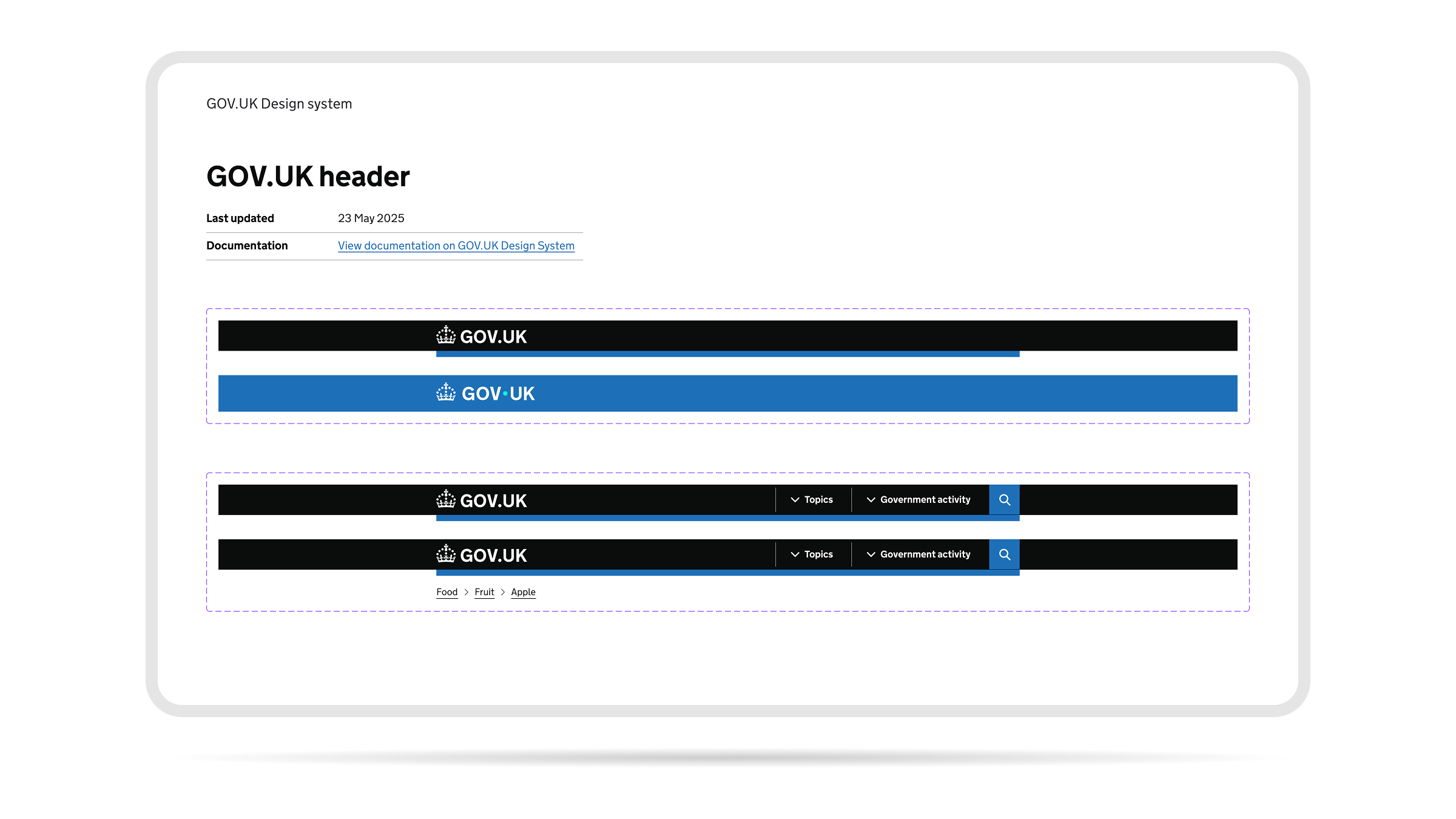
The GOV.UK Design System publishes detailed HTML/CSS guidelines online, but has no officially maintained Figma library from GDS. Community-built kits exist, but they carry no guarantee of accuracy or maintenance cadence, and anything drifting from the live frontend risks accessibility regressions, incorrect states, and mismatched spacing propagating into delivered code.
Reverse-Engineering the Real Thing
Rather than relying on documentation alone, I inspected live GOV.UK service pages, examining component markup, computed styles, interaction states, error conditions, and responsive breakpoints, then updated or rebuilt each element faithfully in Figma.
Inspect Live Components
Examined production GOV.UK pages in DevTools, capturing exact spacing tokens, typographic scale, colour values, and state variants (default, hover, focus, error, disabled).
Build Figma Component Library
Replicated all key GOV.UK components as production-faithful Figma components with variants, ensuring designers could use them with confidence rather than making visual approximations.
Validate Against Spec
Cross-referenced each component against the GOV.UK Design System documentation and real service pages to catch any drift before the library was shared with design and dev teams.
Migrating Styles to Variables
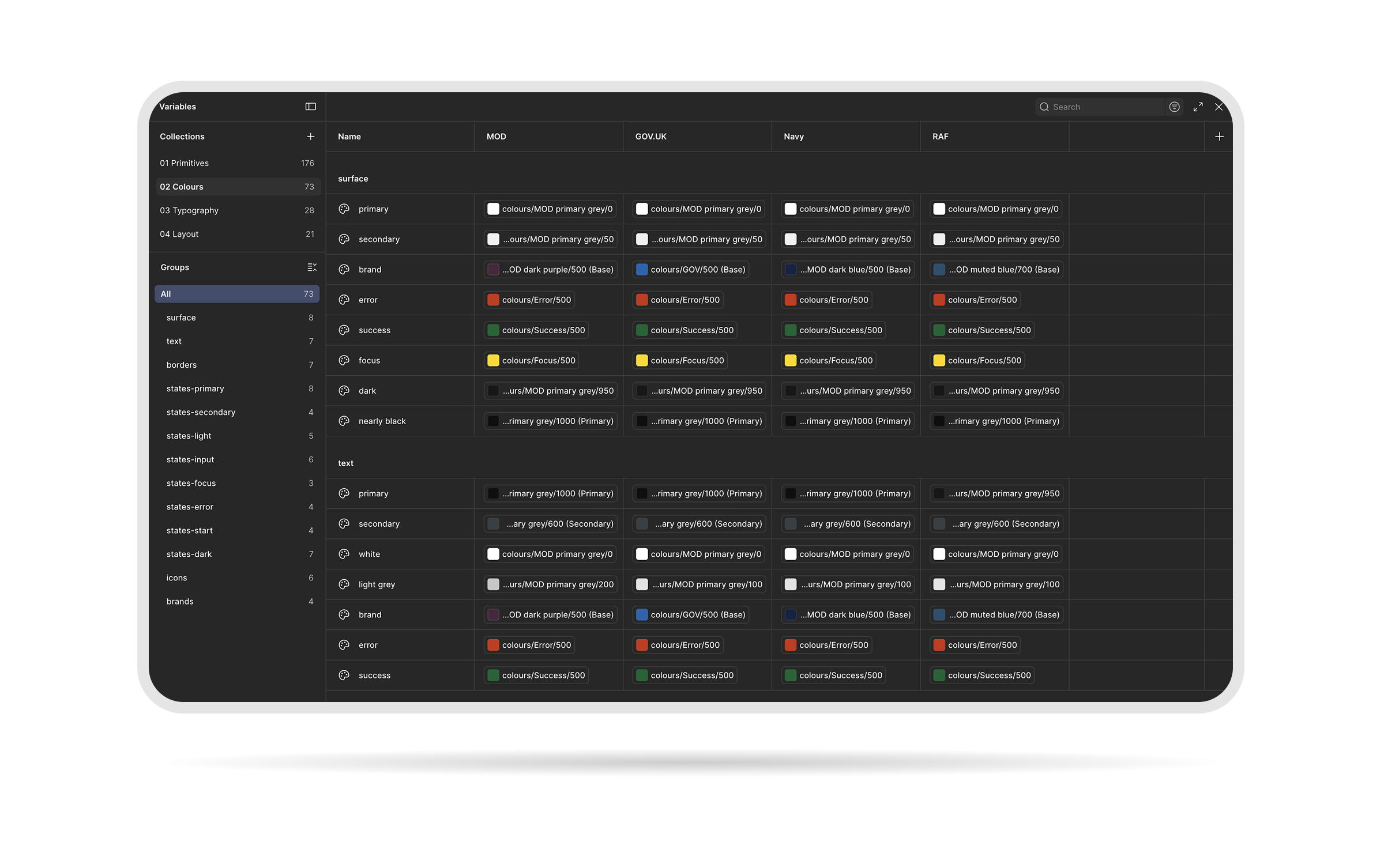
As part of the Figma setup, existing colour and typography styles were converted into Figma variables. This maps directly to how GOV.UK Frontend uses CSS custom properties, making the handoff more accurate, enabling brand theming through mode switching rather than manual overrides, and giving the whole library a single source of truth for every token.
Two Deployments, Different Challenges
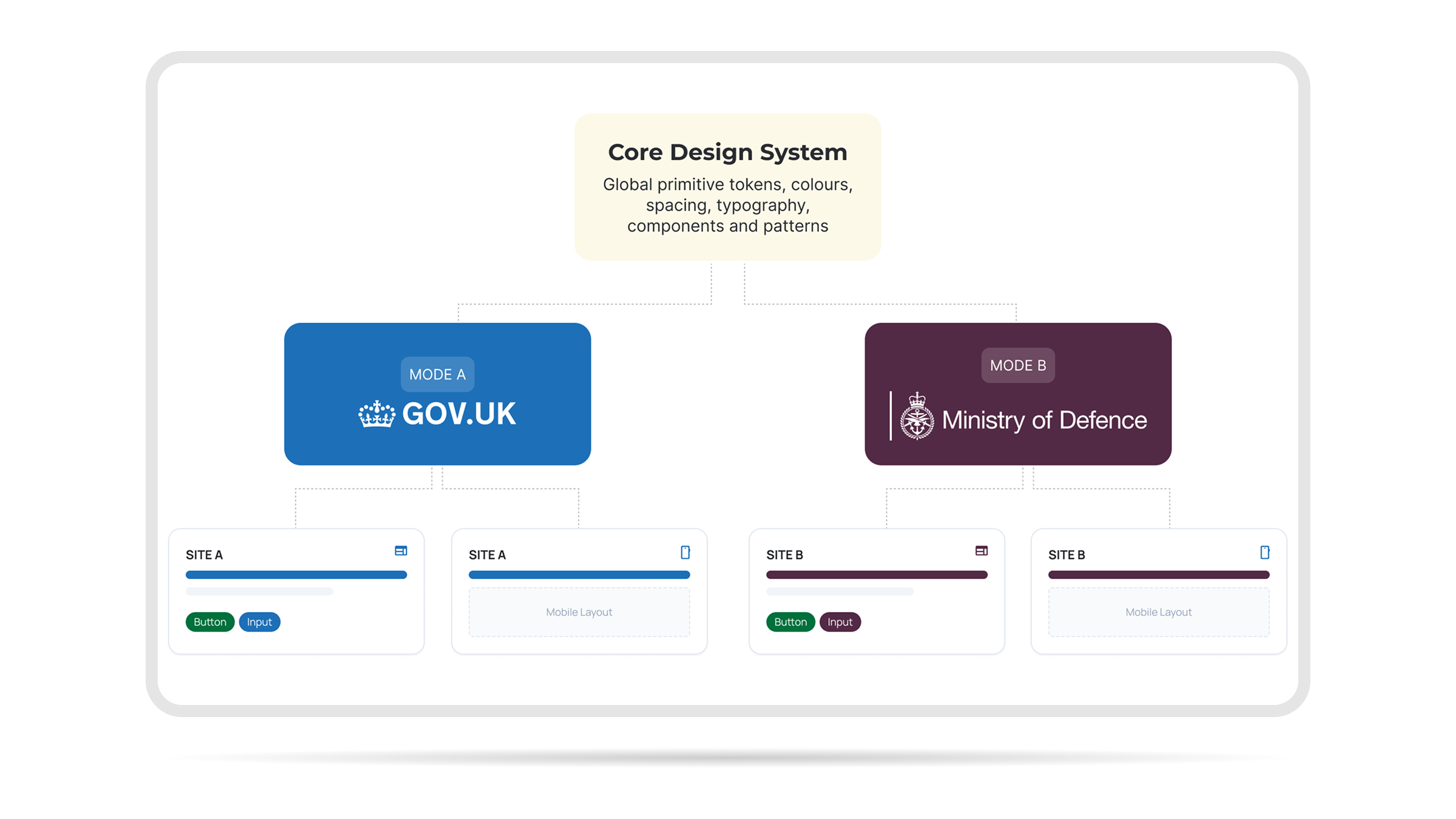
The single Figma library, centered around a core of primitive and semantic variables, uses Figma Modes to seamlessly adapt one master component to two distinct services (GOV.UK and Ministry of Defence). With a simple switch of the mode, the same component dynamically restyles to meet each service's unique audience, constraints, and design decisions.
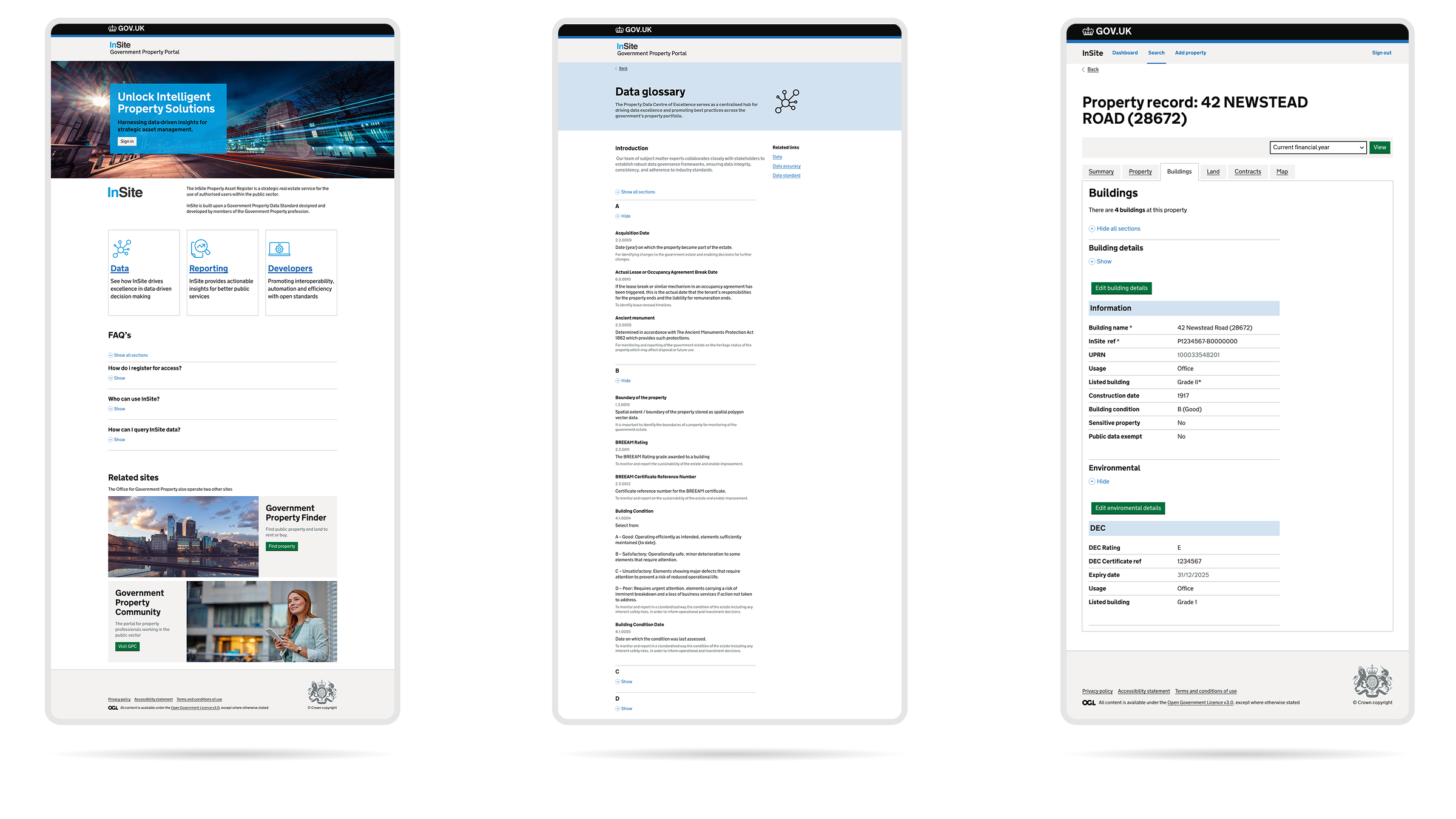
GOV.UK Patterns
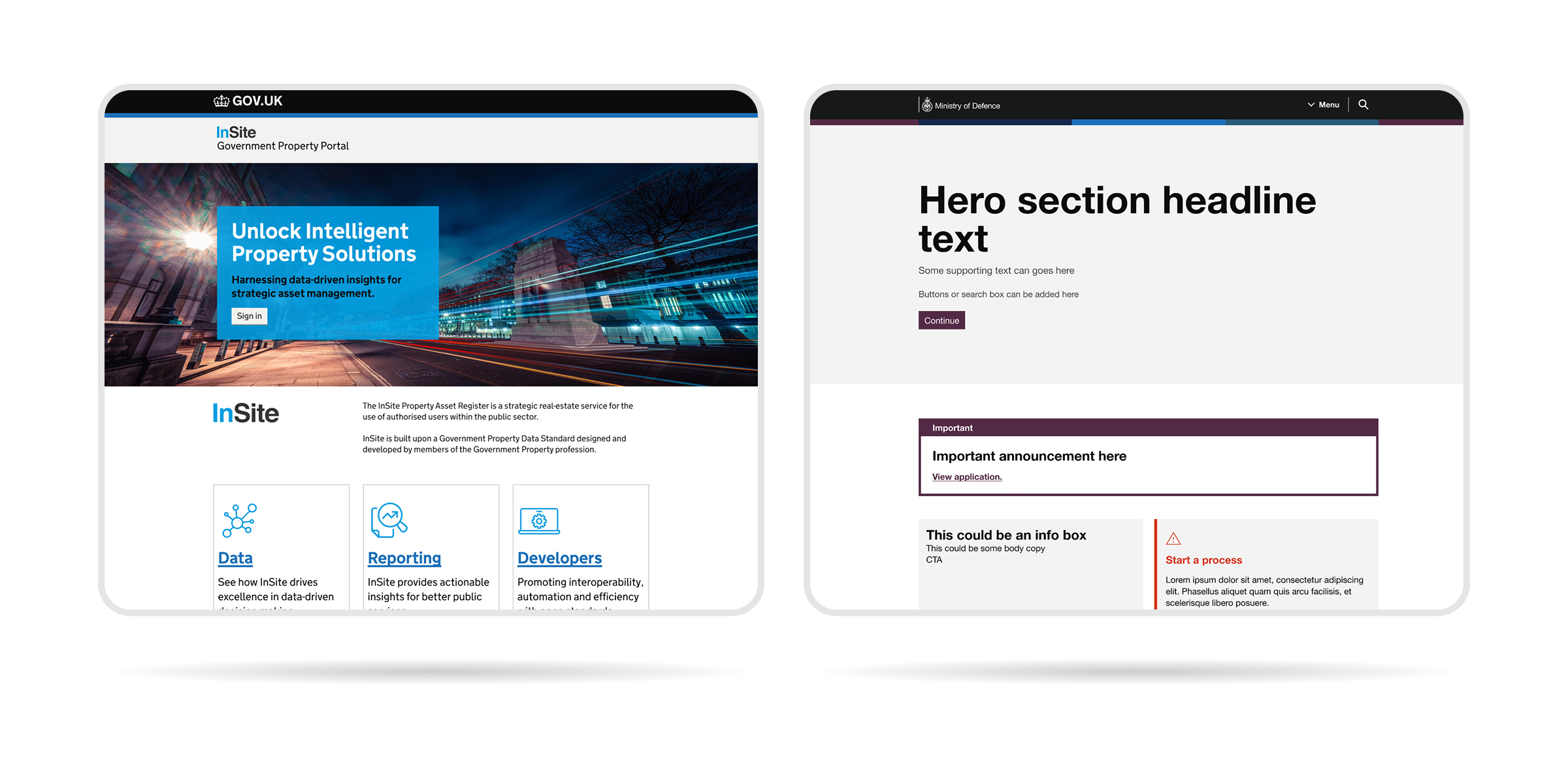
Adhering to GOV.UK GDS standards, these designs implement a consistent, accessible framework. We developed tailored UI components based on established GOV.UK patterns to handle complex property data while ensuring a seamless, intuitive user experience.
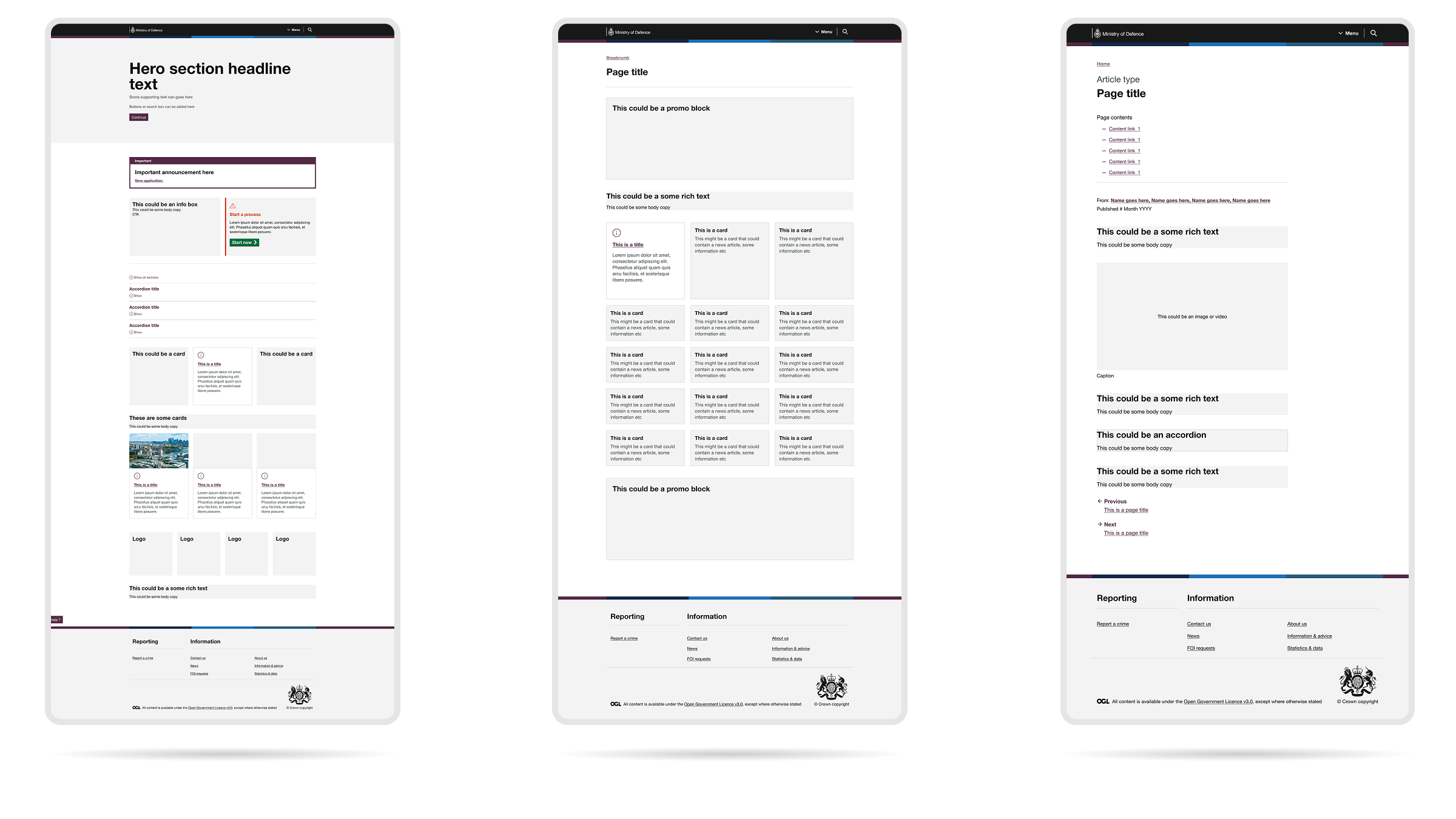
GOV.UK Patterns, MOD Identity
The DSCC project required maintaining the structural integrity and accessibility of the GOV.UK system while expressing the MOD's distinct identity, particularly important given the serious and sensitive nature of the service.
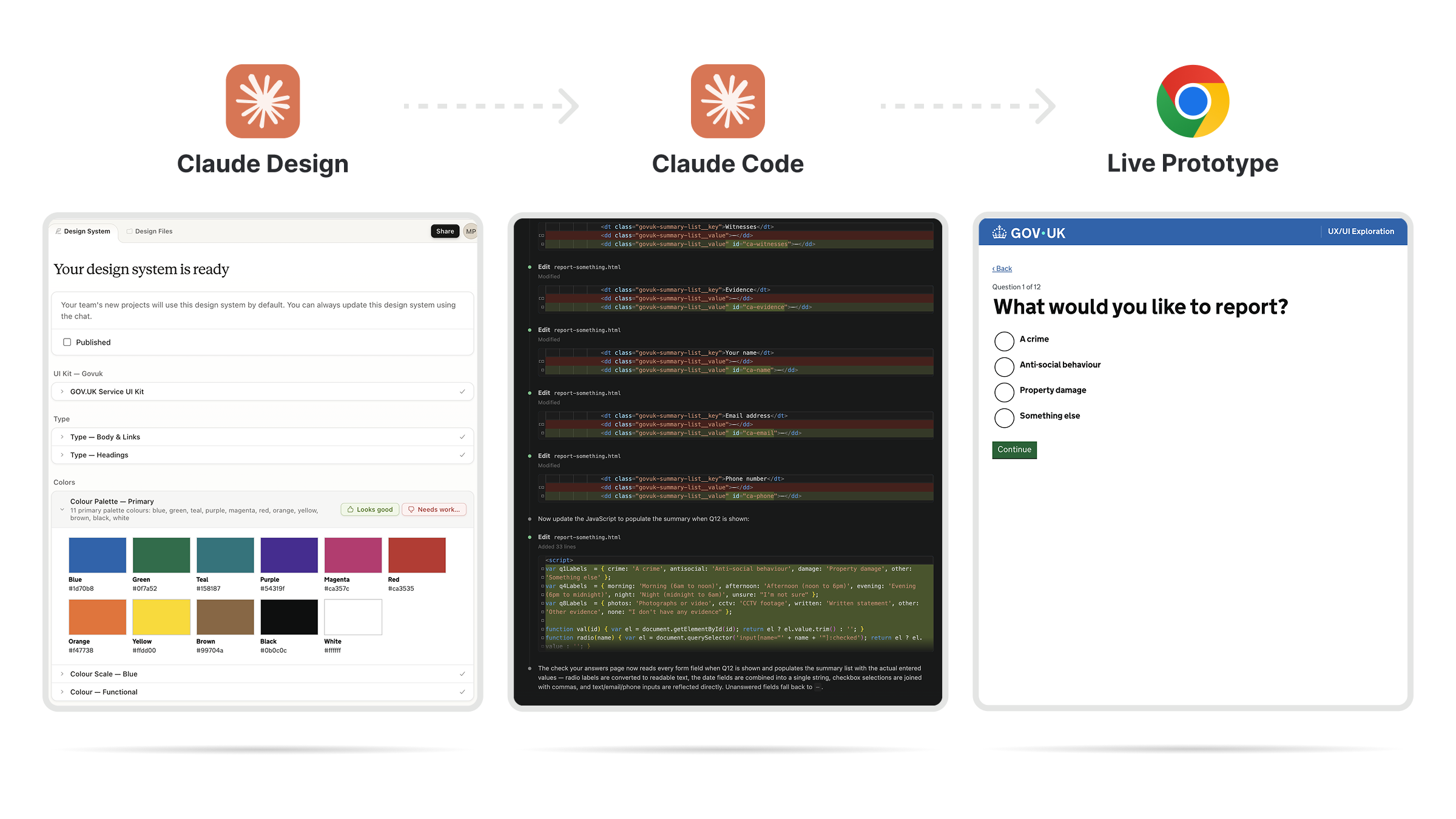
Live-Browser Prototyping with AI
An emerging area of exploration: using AI to iterate on prototypes directly in the browser, rather than in Figma to produce more realistic simulations of the actual user experience.
What This Work Enabled
The combination of a faithful Figma component library, brand-adapted design for the MOD, and AI-assisted prototyping created a substantially more efficient and consistent design process across both services.
Audit Live Assets
Government services designed using the reverse-engineered library
Translate to Design
Component states & variants documented in Figma from live inspection
Rigorous Validation
Potential for AI-assisted prototyping to compress design iteration cycles