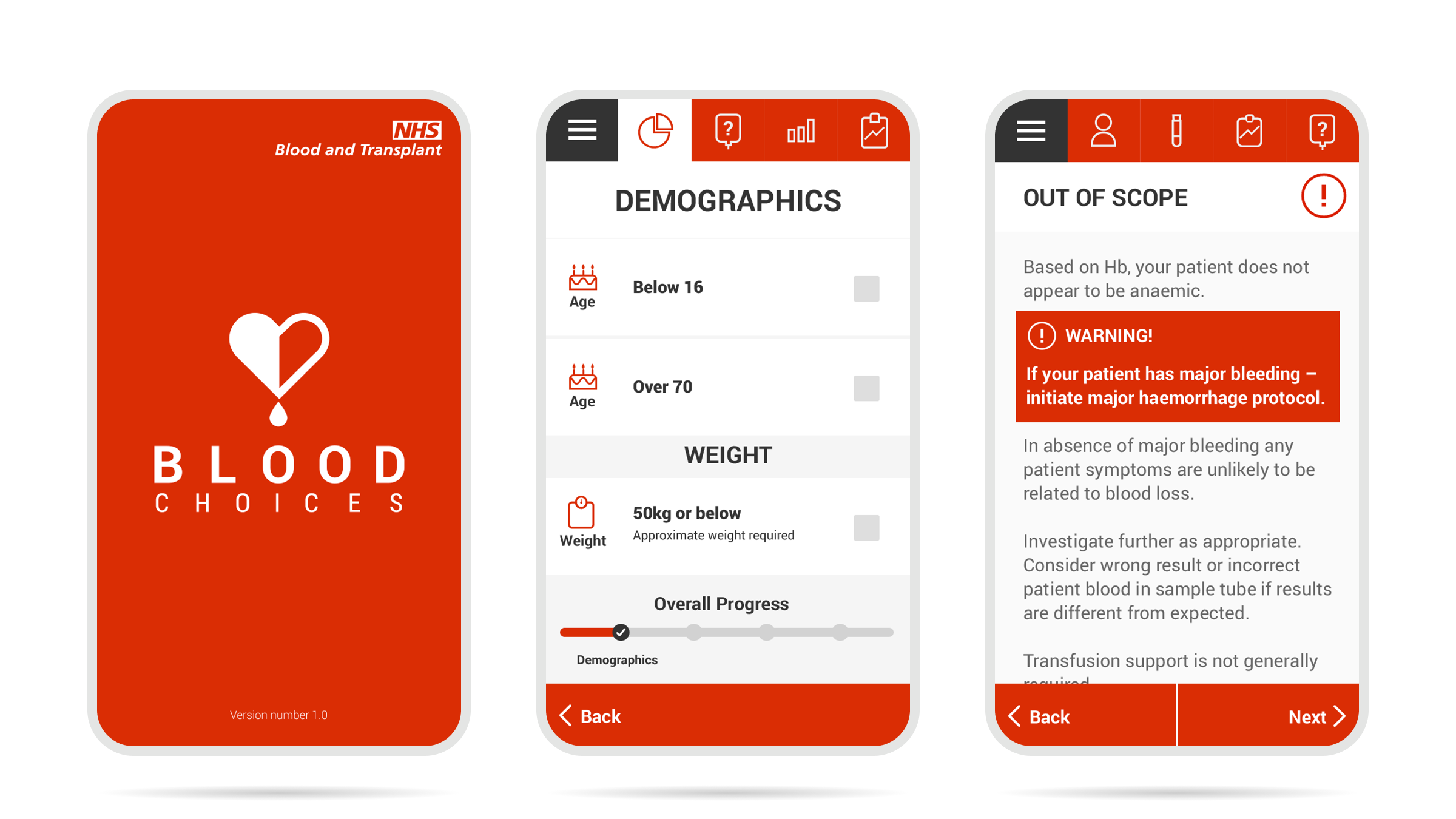
NHS Blood Choices
Class 1 Medical Device App
Designing a Class 1 medical device application for NHS Blood & Transplant, helping clinicians make better decisions about blood component prescribing at the patient bedside and reducing inappropriate transfusions across the NHS.
The Challenge
Increasing demand for blood components, driven by aging populations and new medical therapies, combined with a significant number of inappropriate and unnecessary transfusions, was placing pressure on NHS blood supply and patient safety.
Co-creation with Clinicians
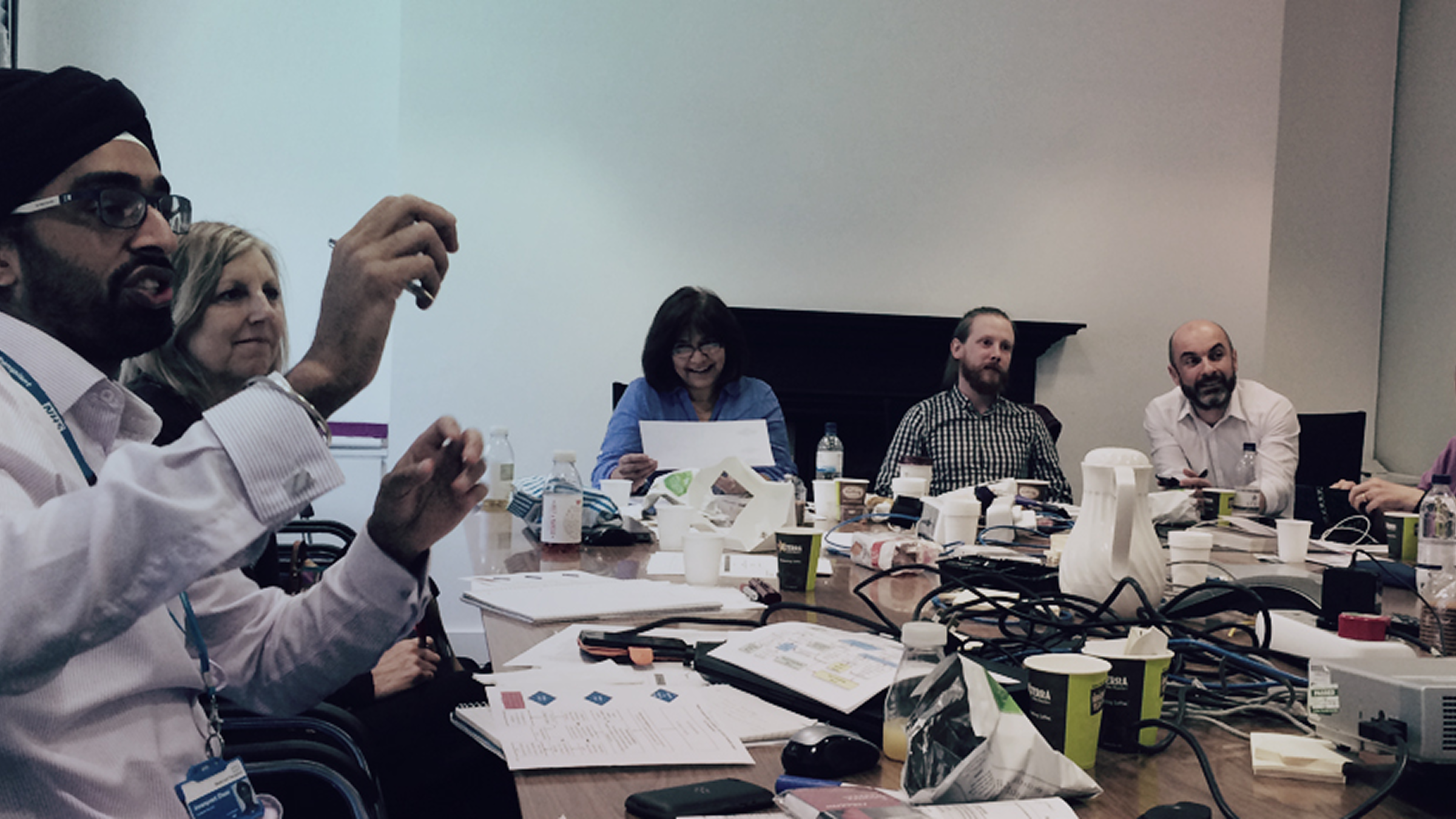
Rather than designing in isolation, the project used a co-creation methodology, working directly with junior doctors, consultant haematologists, transfusion practitioners, and quality managers to shape the app around real clinical contexts and workflows.
Designing for the Bedside
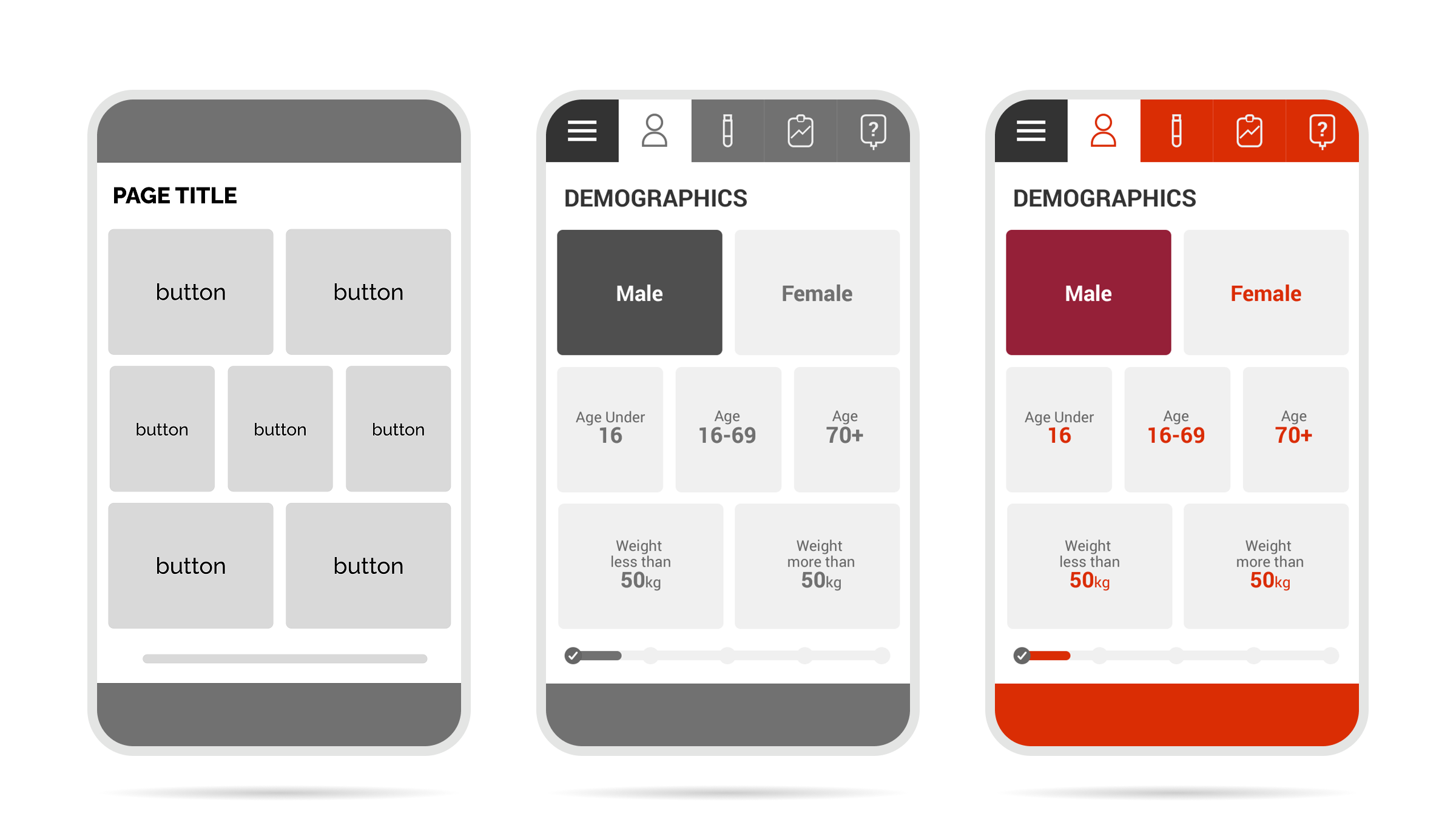
The app needed to work in demanding clinical environments: quick to navigate, legible under pressure, and clear enough to support confident decision-making without interrupting clinical workflow.
Following National Guidelines
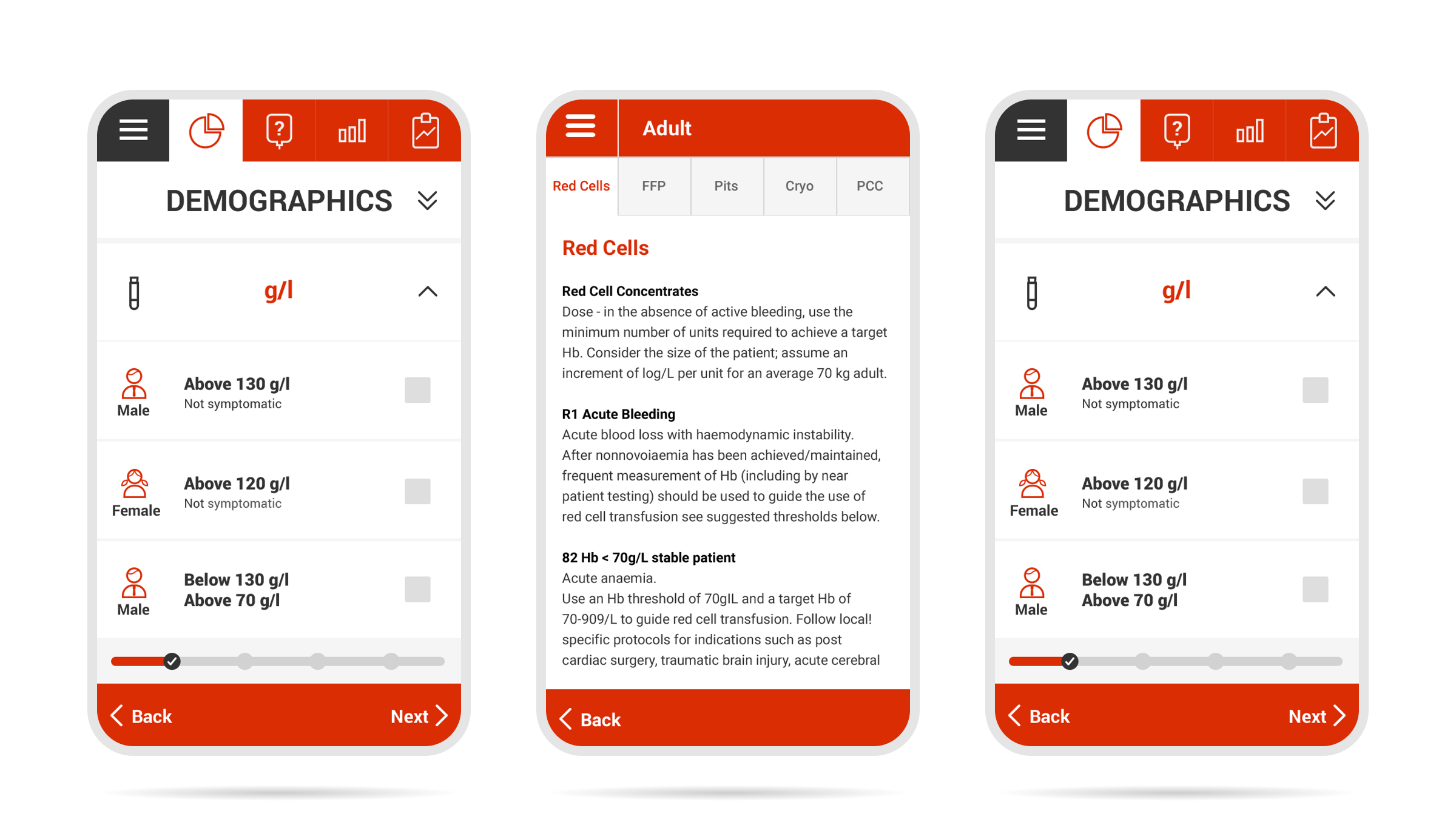
The app surfaces NICE guidelines and NHSBT recommendations at the point of prescribing, helping clinicians follow best practice without having to leave the patient's side to consult reference materials.
Aman Dhesi, Patient Blood Management Regional Lead, NHS Blood and Transplant"It is great we are working on this project to ultimately help improve the safe and appropriate treatment for patients."
Final Designs
The finished application: a clean, accessible interface designed to reduce cognitive load in high-pressure environments while meeting the regulatory requirements of a Class 1 medical device.